2010年5月30日星期日

How to rip DVD to video audio files like AVI WMV MPEG FLV 3GP MP4 MP3

This step-by-step guide will show you how to rip DVD to AVI, WMV, MPEG, FLV, 3GP, MOV, VOB, ASF, MP4, etc, extrac audio from DVD to MP3, WMA, M4A, AAC, WAV, etc and edit DVD Movie with Aiseesoft DVD Ripper.

If you want to know how to convert AVI, XviD, WMV, MPEG, MPG, FLV, DAT, RM, RMVB, MOV, ASF, H.264 to the format you want, you can learn the guide by clicking here: How to convert Video to other video audio files


This DVD Ripper guide includes 4 parts:
How to convert DVD to iPhone/iPod/PSP/Zune/Apple TV/Phone/PS3/Xbox 360/Zen/Pocket PC/AVI/MPEG/MP4?
How to edit, combine, effect and cut DVD movies?
How to extract and rip audio from DVD to MP3 for iPod nano, shuffle and other MP3 players?
How to put DVD clips on Youtube, Myspace?

What you need is Aiseesoft DVD Ripper; you can download it for free here:
http://www.aiseesoft.com/dvd-ripper.html

Part 1: How to convert DVD to iPhone/iPod/PSP/Zune/Apple TV/Mobile Phone/PS3/Xbox 360/Zen/Pocket PC ?

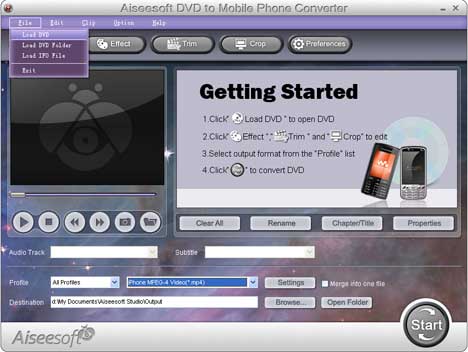
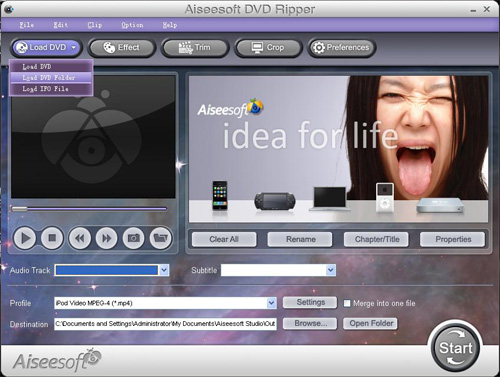
Step1. Insert your DVD disc into your DVD-Rom, then run the software, click "Load DVD" button and add the DVD file. You can also add DVD/IFO from your hard disk by clicking “Load DVD” or “Load IFO File”.

Aiseesoft DVD Ripper - convert and rip DVD to AVI MP4 MPEG for  iPhone iPod

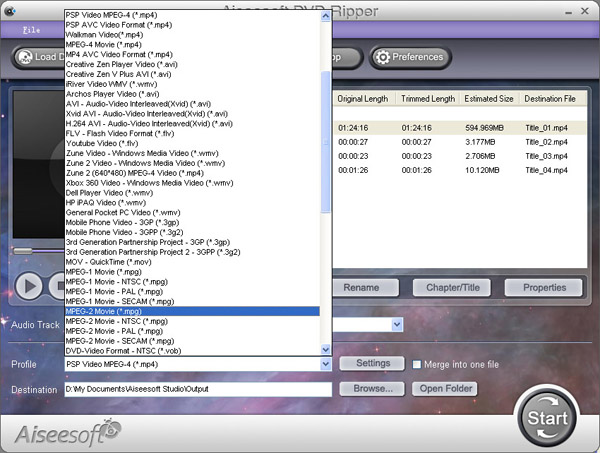
Step2. Ihis software can convert DVD to various video formats such as MPEG-4, AVI, WMV, FLV, 3GP, VOB, etc. Click the "Profile" drop down list to select a format.

Aiseesoft DVD Ripper - convert and rip DVD to AVI MP4 MPEG for  iPhone iPod

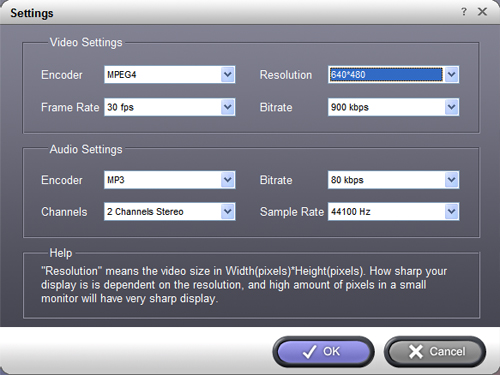
If you don't know much about mobile players, just select a format according to the name of your mobile player. For example, if you want to copy DVD to iPhone, just select "iPhone Video MPEG-4 (*.mp4)", and the default setting works great. If you want to customize the output video, you can click the "Settings" button next to the profile to open the Settings window and set video resolution, frame rate, bitrate, encoder, etc. See the figure below:

Aiseesoft DVD Ripper - convert and rip DVD to AVI MP4 MPEG for  iPhone iPod

Step3. Regular DVD movies usually have several subtitles such as English, French, German, etc. You can select one you prefer. You can also delete the subtitle by selecting "No Subtitle". Selecting Audio is the same.

Aiseesoft DVD Ripper - convert and rip DVD to AVI MP4 MPEG for  iPhone iPod

After the above steps, click "Start" to start conversion.

Next part: How to edit, combine DVD and extract DVD Clips from DVD?

2010年5月29日星期六

How to Convert DVD to Mobile Phone 3GP

Follow the next instruction to learn how to convert DVD to Mobile Phone 3GP with Aiseesoft DVD to Mobile Phone Converter.

Step 1: Free download Aiseesoft DVD to Mobile Phone Converter, install and run it.

Convert DVD to Mobile Phone 3GP

Step 2: Load the DVD movie

Click Load DVD button to add DVD movie to the software.

Step 3: Choose the output format and output folder

Click to open the Profile drop-down list and scroll to select the format, choose "3GP" or other mobile phone formats according to your will. Also, the DVD to Mobile Phone Converter provides many other video format for BlackBerry, Nokia, Motorola, LG, etc.

Click Browse… to set destination folder for you to save the output file.

Tips: To make the output video fit your phone more, you can change Audio Track, Subtitle and define output video size, video effect, video length.

Step 4. Start the DVD to mobile phone 3GP conversion

When all settings are set, click Start button to start the conversion.

Just waiting for a few minutes, you will get your wanted mobile phone 3GP file in destination folder. You can press Open Folder button to find it quickly. More information at: Convert DVD to Mobile Phone 3GP.

2010年5月28日星期五

How to Put Video on a Zune

This guide will show you how to put video on a Zune using Aiseesoft Zune Movie Converter, a professional tool support converting MPG, MPEG, MPEG2, VOB, MP4, M4V, RM, RMVB, WMV, ASF, TS, MKV, AVI, 3GP, FLV, MPV, MOD, TOD, MP3, MP2, AAC, AC3, WAV, MID, MIDI, WMA, M4A, RA, RAM to both Zune video and audio files.

Instruction: Install and run Aiseesoft Zune Movie Converter

Aiseesoft Zune Movie Converter

Step 1: Add File
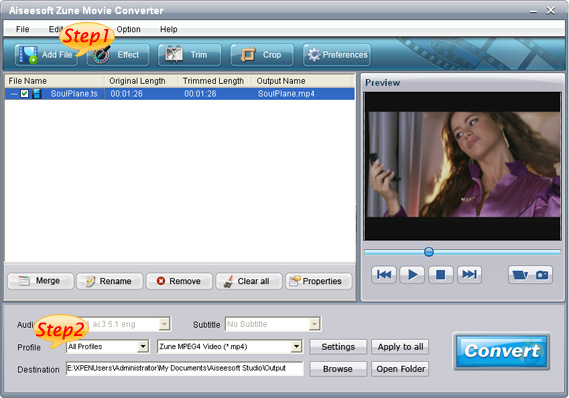
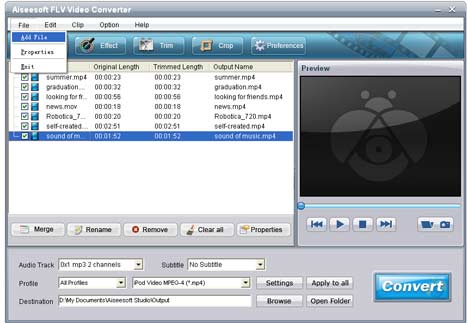
Click the “Add File” button to import video or audio files, you can also click the "File" menu to open the following drop-down menu, then select "Add File" to import files.

Step 2: Output video settings
Select the output video format you need from the “Profile” drop-down list. Click “Settings” button to set your video and audio parameters.


Step 3: Start Conversion
Click “Start” button to start your conversion and it will be finished in a short while.

Tips:

1. Trim Movie
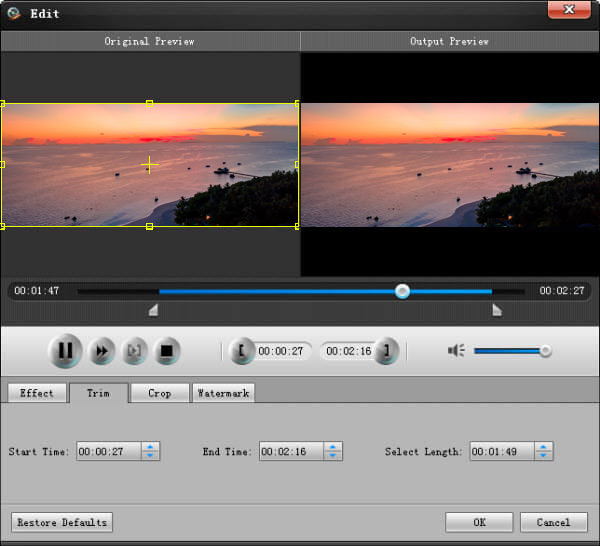
If you just want to convert a clip from your movie, you can click the “Trim” button to open the Trim dialog, you can trim a duration of the video by either dragging the Start Time and End Time sliders or setting the time parameters in each corresponding field.

After you set the trimming time, the length of the captured clip will be shown in the Select Length box for your reference.


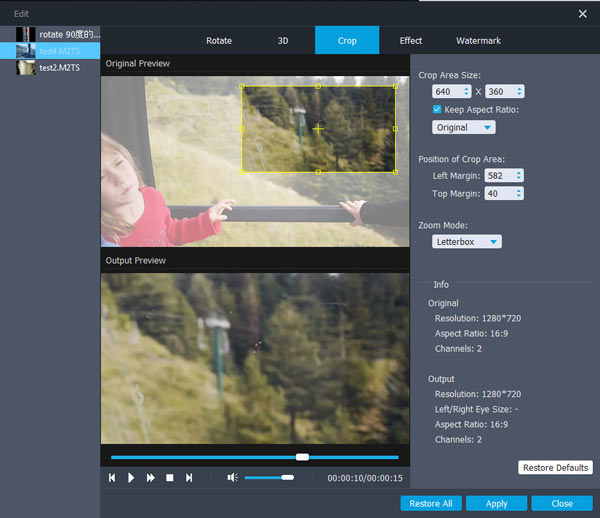
2. Video Crop
With Aiseesoft Zune Movie Converter you can remove the black edges around your movie video by checking the “Crop” option and customize your movie.


There are three methods available to crop your video:
Method 1: Crop by selecting a crop mode
Select a crop mode in the crop mode drop-down list and click OK to save the crop. There are three pre-set crop modes
for your choice: No Crop, Cut off top and bottom black edges, Cut off top black edge.
Method 2: Crop by adjusting the crop frame
The crop frame is the dashed line around the movie video. There are four adjustment lines on the crop frame. Each line allows you to crop the movie video from a different position.
To crop your movie video, you can just move your mouse cursor to an adjustment box and drag the crop frame.
Method 3: Crop by setting the crop values
There are four crop values on the lower left part of the crop window: Up, Down, Left and right. You can set each value to crop your movie video, and the crop frame will move accordingly.


Before you start to crop your movie video, you can select an output aspect ratio from the Zoom list. There are four choices available: Full screen, Keep original, 16:9 and 4:3. After you select an output aspect ratio and finish the crop, the result can be previewed in the Preview window of the program main interface.

3. Capture your favorite image and merge several videos into one file
If you like the current image of the video you can use the “Snapshot” opinion. Just click the “Snapshot” button the image will be saved and you can click the “File” next to “Snapshot” button to open your picture. You can select the destination of the picture by clicking the “Preference” button. As default the captured image will be saved at: your \My Documents\Aiseesoft Studio\Snapshot

If you want to merge the selected video files into one output file you can check the “merge into one file” option. As default the merged file is named after the first selected file (either a title or a chapter)

2010年5月26日星期三

Forbes Buys True/Slant

That was fast. And not that surprising: Forbes Media, which invested in digital news start-up True/Slant two years ago and brought on founder Lewis Dvorkin as a “consultant” this spring, has now bought the entire company. Dvorkin’s new title is chief product officer.

Dvorkin’s old company tried to build a platform for free-lance bloggers, paying each contributor a small per-piece payment based on traffic and other goals (here’s Walt Mossberg’s review of the site, from 2009). Forbes COO Tim Forbes, whose company owned a 20 percent stake in True/Slant, tells me the publisher will use True/Slant in some way. But what he’s really buying here is Dvorkin, who had previously worked for the magazine in the late 1990s before heading to AOL (AOL).

“I’m tremendously excited to have Lewis come aboard as chief product officer. That’s the core message,” Forbes says. He adds that he hadn’t thought he would buy True/Slant when he brought Dvorkin on to overhaul his Web site and magazine this spring, though it seems as if the idea didn’t come completely from out of the blue. “It wasn’t planned because we didn’t know how things will play out.”

All right. So how’s Forbes Media doing, anyway (disclosure: I worked for Forbes for 10 years)?

Okay-ish, Forbes ventures. He says his family company is still looking for a “very senior executive” to fill the place of Jim Berrien, Forbes magazine’s former publisher, and Jim Spanfeller, who ran the Forbes Web site. That job search, which has been running since last summer, is for a single position.

And the business itself? “Business improves,” Forbes says. “The world heals, and we’re seeing real improvements in order flow. Things are getting better.”

Here’s the release:

Lewis Dvorkin to Lead All Forbes Editorial Areas as Chief Product Officer

The Company to Acquire True/Slant

New York, New York (May 25, 2010) – Forbes announced today that it had agreed in principle to acquire True/Slant, a unique, web-based, news platform company. Founder and Chief Executive Officer Lewis Dvorkin of True/Slant will be joining Forbes to lead all editorial areas at Forbes as Chief Product Officer effective June 1.

Mr. Dvorkin started consulting with Forbes in April of this year. He had been Executive Editor of the Forbes magazine from December 1996 to April 2000. In his new capacity Mr. Dvorkin will be creating and implementing many new initiatives in the editorial product and the engagement of Forbes’s audiences. He will be charged with re-architecting the Forbes.com website; redesigning the magazine; and will assume responsibility for all editorial product across Forbes.

In making the announcement Tim Forbes, President and COO said: “These times demand new models for delivering information and engaging audiences and for the ways we run our business.

“Lewis Dvorkin, a seasoned journalist (including a previous stint with Forbes), a business entrepreneur and founder of True/Slant, and a social media pioneer is the ideal leader for Forbes editorial vision and products at this stage.

“Forbes mission and message will not change. There will be new opportunities for people inside Forbes; new opportunities for audiences to have a deeper relationship with Forbes; and new opportunities for marketers to engage with our important audiences.”

“To participate and lead Forbes into its next stage of media life is truly exciting,” said Mr. Dvorkin. ”Forbes is a trusted brand with deep and specific meaning to those interested in information that inspires and enables them to succeed and to create wealth.” He continued, “With all of Forbes’s great experts, the wealth of Forbes data, and its real-time web features, we have a unique ability to stimulate the social media conversation. Our journalists, producers, audiences, marketers and all variety of entrepreneurs will be engaged as they never have been before with one another. Forbes is stepping ahead of everyone on this one.”

Mr. Dvorkin brings to this new position thirty-five years experience in both old and new media platforms. Besides his years at Forbes, Mr. Dvorkin was Page One Editor of The Wall Street Journal, a Senior Editor at Newsweek, and an editor at The New York Times. After leaving Forbes, Mr. Dvorkin was Senior Vice President, Programming at AOL, where he was responsible for News, Sports and Network Programming and played a significant role in the launch of TMZ.com.

Forbes Media encompasses Forbes magazine and Forbes.com, the #1 business site on the Web that reaches on average more than 18 million people monthly. The company publishes Forbes and Forbes Asia, which together reach a worldwide audience of more than 6 million readers. It also publishes ForbesLife and ForbesWoman magazines, in addition to licensee editions in China, Croatia, India, Indonesia, Israel, Korea, Latvia, Poland, Romania, Russia and Turkey.

2010年5月25日星期二

Tony Blair Partners Up With Khosla Ventures

Venture-capital firm Khosla Ventures said Monday that it has formed a partnership with former British Prime Minister Tony Blair. Under the partnership, Mr. Blair, who left office two years ago, will become a senior adviser to Khosla Ventures, a Silicon Valley venture firm founded by venture capitalist Vinod Khosla. Mr. Khosla and his partners, who last year raised more than $1 billion in new funds that they invest in a range of technology and clean technology companies, said they will work with Mr. Blair to build awareness of alternative energy and energy efficiency solutions among public policy makers.

Mr. Khosla said the partnership means he can pick up the phone and “ask Tony for advice” in areas such as environmental policy. He added, “Tony’s going to help us in many areas that techie nerds in Silicon Valley like us don’t understand.”

Read the rest of this post on the original site

2010年5月23日星期日

Samsung Whistleblower Returns to the Public Eye

The man who led Samsung Electronics and the rest of South Korea’s largest conglomerate for 21 years, Lee Kun-hee, is back in the public eye after again becoming chairman of the technology giant two months ago.

But so is the corporate whistleblower whose accusations led to Mr. Lee’s resignation and tax fraud conviction in 2008.

Kim Yong-cheol, a former attorney in the Samsung conglomerate, has a best-selling book about his life, work at Samsung and his thoughts about Mr. Lee’s control of the 64-company empire.

But Mr. Kim has gotten virtually no media attention for the book in South Korea. Newspapers and magazines have turned down advertising for the book and none have printed reviews of it, all in apparent fear of upsetting Samsung, which is the biggest advertiser in the country.

Read the rest of this post on the original site

How to Convert M2TS to iPad

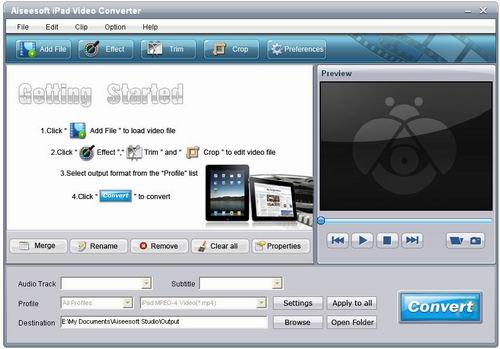
After downloading the installation package, double click it to install. Then run Aiseesoft M2TS to iPad Converter.

Step 1: Add files

Add the M2TS file by clicking the “Add File” button.

Step 2: Choose profile, destination and settings

This M2TS to iPad Converter allows you to select your preferred audio track and subtitle for the output video. You are also able to choose the output format in the list by clicking the Profile drop-down button. Click “Browse” button to choose the destination file to place the output file.

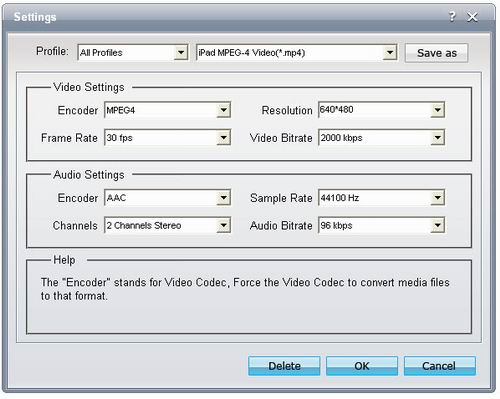
M2TS to iPad Converter enables you to adjust some further settings, such as Video Encoder, Video Frame Rate, Audio Sample Rate and so on.

Step 3: Start M2TS to iPad conversion

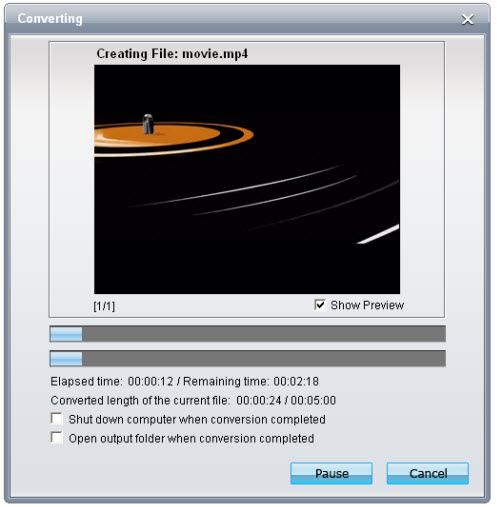
Click the button to convert M2TS to iPad.

And the process interface can help you see the whole converting.

Now download Aiseesoft M2TS to iPad Converter and have a try.

2010年5月21日星期五

How to Convert FLV to MP4

Step-by-step guide to tell you how to convert FLV to MP4 with Aiseesoft FLV Video Converter.

Step 1: Free download Aiseesoft FLV Video Converter and install it.

Step 2: Add FLV files.

Click Add File button to import your FLV files.

Convert FLV to MP4

Step 3: Set output format and output folder.

Choose the file you want to convert, click "Profile" drop-down button to choose your needed output format, then click Browse… button to choose destination folder for saving your converted MP4 files.

After setting the profile, you can adjust output parameters by clicking Settings button.

Step 4: Start FLV to MP4 conversion.

Click Start button to start the conversion. Several minutes later, you will find your output MP4 file in destination folder.

Want know more about Aiseesoft FLV Video Converter, please visit: Convert FLV to MP4.

2010年5月20日星期四

How to Put Video on iPod

This guide will show you how to put video on iPod using Aiseesoft iPod Movie Converter, a professional tool support converting MPG, MPEG, MPEG2, VOB, MP4, M4V, RM, RMVB, WMV, ASF, TS, MKV, AVI, 3GP, FLV, MPV, MOD, TOD, MP3, MP2, AAC, AC3, WAV, MID, MIDI, WMA, M4A, RA, RAM to both iPod video and audio files.

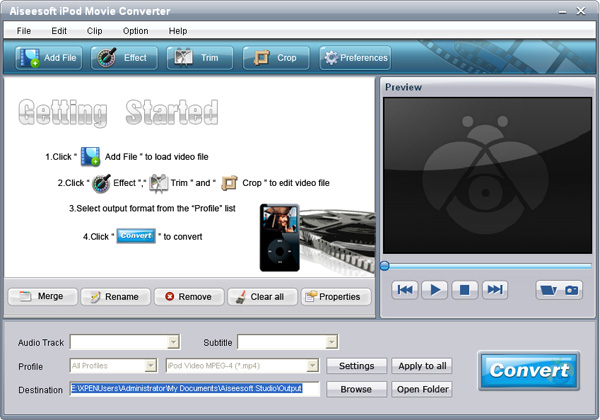
Instruction: Install and run Aiseesoft iPod Movie Converter

Aiseesoft DVD to FLV Converter

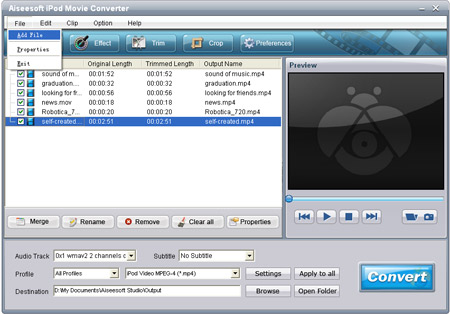
Step 1: Add File
Click the “Add File” button to import video or audio files, you can also click the "File" menu to open the following drop-down menu, then select "Add File" to import files.

Step 2: Output video settings
Select the output video format you need from the “Profile” drop-down list. Click “Settings” button to set your video and audio parameters.


Step 3: Start Conversion
Click “Start” button to start your conversion and it will be finished in a short while.

Tips:

1. Trim Movie
If you just want to convert a clip from your movie, you can click the “Trim” button to open the Trim dialog, you can trim a duration of the video by either dragging the Start Time and End Time sliders or setting the time parameters in each corresponding field.

After you set the trimming time, the length of the captured clip will be shown in the Select Length box for your reference.


2. Video Crop
With Aiseesoft iPod Movie Converter you can remove the black edges around your movie video by checking the “Crop” option and customize your movie.


There are three methods available to crop your video:
Method 1: Crop by selecting a crop mode
Select a crop mode in the crop mode drop-down list and click OK to save the crop. There are three pre-set crop modes
for your choice: No Crop, Cut off top and bottom black edges, Cut off top black edge.
Method 2: Crop by adjusting the crop frame
The crop frame is the dashed line around the movie video. There are four adjustment lines on the crop frame. Each line allows you to crop the movie video from a different position.
To crop your movie video, you can just move your mouse cursor to an adjustment box and drag the crop frame.
Method 3: Crop by setting the crop values
There are four crop values on the lower left part of the crop window: Up, Down, Left and right. You can set each value to crop your movie video, and the crop frame will move accordingly.


Before you start to crop your movie video, you can select an output aspect ratio from the Zoom list. There are four choices available: Full screen, Keep original, 16:9 and 4:3. After you select an output aspect ratio and finish the crop, the result can be previewed in the Preview window of the program main interface.

3. Capture your favorite image and merge several videos into one file
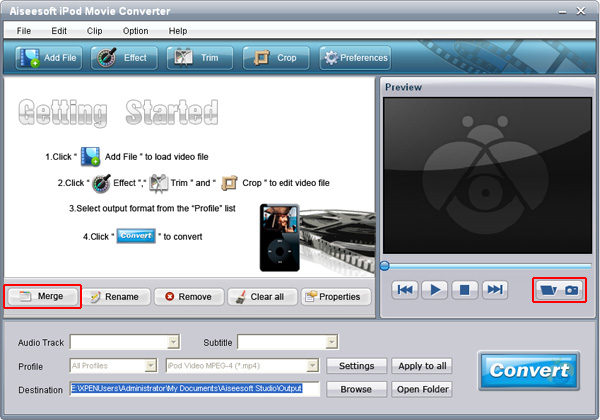
If you like the current image of the video you can use the “Snapshot” opinion. Just click the “Snapshot” button the image will be saved and you can click the “File” next to “Snapshot” button to open your picture. You can select the destination of the picture by clicking the “Preference” button. As default the captured image will be saved at: your \My Documents\Aiseesoft Studio\Snapshot

If you want to merge the selected video files into one output file you can check the “merge into one file” option. As default the merged file is named after the first selected file (either a title or a chapter)

2010年5月18日星期二

Venture-Backed IPOs Head to Taiwan

Venture capitalists have had a tough time making profits amid a lack of initial public offerings and mergers and acquisitions of their start-up investments in the past few years. While that activity has improved so far this year, many venture-capital firms are trying to be more creative in how they reap returns generally.


Storm Ventures managing partner Sanjay Subhedar

For venture-capital firm Storm Ventures, that means taking some of its start-ups public in overseas markets. In 2007, one of its investments, mobile games company Com2uS, went public on the KOSDAQ exchange in South Korea. And this Tuesday, another of Storm’s investments, semiconductor start-up Integrated Memory Logic, is slated to go public on the Taiwan Stock Exchange.

Storm managing director Sanjay Subhedar recently discussed why some start-ups are heading overseas to go public.

WSJ: Why take a start-up public overseas?
Mr. Subhedar: The bar is lower and the cost is lower. In the U.S., the cost (to go public) is $2 million to $3 million and (start-ups have to meet the bar of) $100 million in (annual) revenue. When Com2uS went public, it had $12 million in (annual) revenue.

WSJ: What are the hurdles to taking companies public on overseas stock exchanges?
Mr. Subhedar: The easy part is legal and accounting–you just get the experts to do it.
But there are hurdles. Employee options are a big part of U.S. companies and investors understand it. In Korea and Taiwan, option expenses aren’t ignored and people are more concerned about option dilution.
In terms of liquidity (for stocks that trade), the markets overseas aren’t as deep as here.

WSJ: What’s the profile of IML?
Mr. Subhedar: We invested in IML in January 2005 and put in $4 million. Last year, the company had $75 million in revenue and in the first quarter, it had $20 million, so it’s on an $80 million revenue run rate.
We expect the IPO to raise about $40 million. The subscription period ended last Tuesday or Wednesday, and it was significantly oversubscribed.

WSJ: Do you expect to take more companies public overseas in the future?
Mr. Subhedar: We are. I’m told there are 40 other U.S. companies waiting in the wings behind IML to go public in Taiwan.

2010年5月17日星期一

More AMD-Powered Laptops on Tap, for Consumers and Companies

Advanced Micro Devices has long been a laggard in laptops. But the chip maker is starting to show some new momentum.

Hewlett-Packard
An H-P ProBook business laptop, powered by AMD

Hewlett-Packard, the world’s biggest PC maker, last week announced 14 new notebook systems based on AMD chips. Other manufacturers are expected to follow suit soon, including Acer and Lenovo. AMD has scheduled a webcast Wednesday morning that will discuss its latest technology for the laptop market.

Such companies will continue to build most of their products using chips from Intel, AMD’s much-larger competitor. But their increased purchases from AMD are a sign that it is finally catching up to Intel in an area that has been a big weakness–power consumption.

“They have closed the gap considerably and are very competitive now,” says Ted Clark, senior vice president and general manager of H-P’s notebook PC group.

Significantly, Clark said, H-P is adding the AMD chips not only to laptops aimed at consumers and small businesses–where AMD has long had a presence–but also for the first time in low-end portables that H-P will use in bids for large sales to companies with offices around the world. “This is a big step,” he says.

AMD, starting in 2003, started to gain credibility at corporations with a chip called Opteron for server systems. For a time, it could boast market-leading performance for those machines and some high-end desktop systems.

Intel, which mounted a successful counterattack in those sectors, also placed a well-timed bet that an increasing proportion of computer buyers would shift to portables–a shift that required low battery consumption. The Silicon Valley giant was aided by the fact that it didn’t only sell the microprocessors that are commonly described as the brains of a computer; it also was a major provider of ancillary products called chip sets that connect microprocessors to the rest of a system. Selling such a “platform” of technology is important to help manage other components, such as displays, that account for much of a PC’s power draw.

AMD, by contrast, relied on third-party companies that sold chip sets that work with its microprocessors. That changed after its 2006 purchase of ATI Technologies, which sold both chip sets and chips used to manage graphics. It began offering platforms of chips for laptop applications, which seem to be gradually getting better. Chris Cloran, corporate vice president and general manager of AMD’s client division, estimates the company has added about two hours to the average battery life of laptops through improvements to its microprocessors and chip sets.

Intel, which is holding its annual meeting with analysts Tuesday, still has major advantages. It has an advanced production process that helps turn out chips more economically and can also help reduce power consumption. With its tiny Atom chip, Intel powered a market for low-priced portables called netbooks–now a sizeable market that AMD has not addressed.

For the moment, though, Cloran expresses relief that the PC makers that have been hounding him about the power-consumption issue seem to be satisfied. “It’s nice to talk about other things than battery life,” he says.

2010年5月16日星期日

Big Music Wins One: LimeWire Loses Court Fight

A big victory for Big Music: A federal court has ruled in favor of the music labels in their fight against LimeWire, one of the most prominent file-sharing services on the Web.

You can read all of U.S. District Court Judge Kimba Wood’s ruling at the bottom of the post. But the short version is that Wood, using the Supreme Court’s Grokster decision as a guide, found that LimeWire is indeed guilty of copyright violations. In her words:

LimeWire… (1) is aware that LimeWire’s users commit a substantial amount of copyright infringement; (2) markets LimeWire to users predisposed to committing infringement; (3) ensures that LimeWire enables infringement and assists users committing infringement; (4) relies on the fact that LimeWire enables infringement for the success of its business; and (5) has not taken meaningful steps to mitigate infringement.

LimeWire is unusual among post-Napster, post-Grokster file-sharing operations in that it operates out in the open, in the U.S. The company, based in New York City and owned by investor Mark Gorton, actually sells a smattering of music itself with the blessing of some of the smaller music labels. But while the company has been engaged in a long back-and-forth with the big guys, it has never reached a settlement.

Meanwhile, almost all of the music available on the service (93 percent, according to a study used in the lawsuit) and even more of the stuff actually downloaded (98.8 percent, via the same study) is protected by copyright and should not have been there. Court documents state that LimeWire generated revenue of $20 million in 2006.

LimeWire does tell its users they shouldn’t steal music. This is the warning you get when you try to do so:

But that’s not enough, Wood ruled. And certainly not when the service was going out of its way to court users searching Google (GOOG) for free tunes. From her ruling:

LimeWire conducted a marketing campaign through Google AdWords, whereby Google users who entered certain search queries, such as “replacement napster,” “napster mp3,” “napster download,” “kazaa morpheus,” “mp3 free download,” and dozens of other phrases containing the words “napster,” “kazaa,” or “morpheus,” would see an advertisement leading them to the LimeWire website.

The next step in the case is a June 1 conference. Here’s LimeWire CEO George Searle’s statement, which doesn’t include a vow to appeal the ruling:

LimeWire strongly opposes the Court’s recent decision. LimeWire remains committed to developing innovative products and services for the end-user and to working with the entire music industry, including the major labels, to achieve this mission. We look forward to our June 1 meeting with Judge Wood.

And here’s the end-zone dance from Mitch Bainwol, CEO of the music industry’s lobbying group:

This definitive ruling is an extraordinary victory for the entire creative community. The court made clear that LimeWire was liable for inducing widespread copyright theft.

LimeWire is one of the largest remaining commercial peer-to-peer services. Unlike other P2P services that negotiated licenses, imposed filters or otherwise chose to discontinue their illegal conduct following the Supreme Court’s decision in the Grokster case, LimeWire instead thumbed its nose at the law and creators. The court’s decision is an important milestone in the creative community’s fight to reclaim the Internet as a platform for legitimate commerce. By finding LimeWire’s CEO personally liable, in addition to his company, the court has sent a clear signal to those who think they can devise and profit from a piracy scheme that will escape accountability.

We are gratified by the court’s careful and thorough analysis of the facts and applicable law.

Bigger question: What does this mean for the music industry? Assuming Wood’s ruling stands, this one will definitely feel good for the labels, and it would have been a very big deal had they lost. But it certainly won’t help them in fighting less formally organized P2P services or those set up outside the U.S.

2010年5月14日星期五

How to Make iPhone Ringtone

You bought an iPhone and love all its features, but wish you didn't have to pay for your songs twice to get a ringtone. (We know that iPhone, iPhone 3G Ringtones use the file extension .M4R. And the users must pay $2 for a piece of song through Apple iTunes store). There are plenty of songs in your music library, but no way to make ringtones from any of them. Rihgt?

Actually, with a little bit of trickery (nothing illegal) you can create ringtones from any one of your non-DRM songs.

This works on both Mac and Windows PCs.

Window Users

You can create free iPhone Ringtones by yourself with Aiseesoft iPhone Ringtone Maker.
You can take the following step-by-step instructions to start.
Step 0: Download and install Aiseesoft iPhone Ringtone Maker.
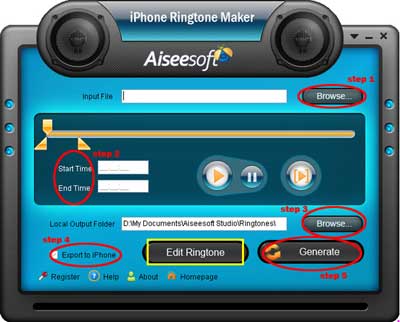
After a short while, you can see the following interface:

iPhone Ringtone Maker

Step 1: Click "Browse" on the right side of "Input File" to import the file that you want to make ringtone from it.
Step 2: Play it and listen the music to find the segment that you want to use it as ringtone. Then drag and click the start & end slider to set your wanted segment, or type the start & end time in the corresponding text box directly to get the exact segment. You also can pre-listen the converted audio before generate.
Step 3: Click "Browse" on the right side of "Local Output Folder" to choose the output destination.
Step 4: Check "Export to iPhone" option, the converted ringtone will be load to your iPhone directly.
Step 5: After all the settings are finished, click "Generate" to begin making your own iPhone ringtone.

Key function
* Convert any video to iPhone ringtone M4R
* Create iPhone ringtone from any audio files
* Get any clips from video and audio
* Edit Added iPhone ringtones

Using Aiseesoft iPhone Ringtone Maker, you are free to edit the added iPhone ringtone by removing it or renaming it directly.

For Mac Users, please go to Aiseesoft iPhone Ringtone Maker for Mac.

How to Transfer Files from PC to Your iPhone

Next let us learn how to transfer files from PC to your iPhone with Aiseesoft iPhone Transfer.

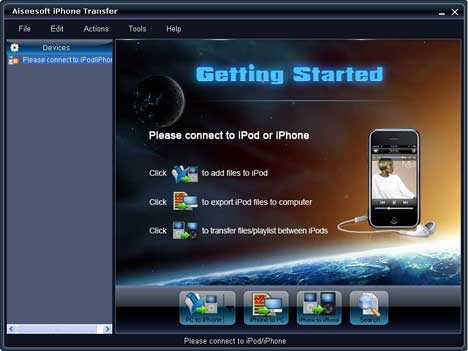
Step1 Download and install Aiseesoft iPhone Transfer. The interface is like:

Transfer Files from PC to Your iPhone

Step2 Run the software, and connect your iPhone/iPod to your computer via USB cable.

Step3 Click PC to iPhone to seek the files or folders that you want to import to iPhone and click OK. The process of transferring will be finished instantly.

Besides, Aiseesoft iPhone Transfer can transfer all video and audio files or folders accepted by iPhone. These formats include MP4, M4V, MP3, WMV. Strong search function can find files you need easily. Possessed of friendly user-interface, it is easy to operate, even for the new users. Just connect it with your iPhone, all the process can be finished in few clicks.

Want to transfer from PC to iPhone fast and conveniently, please try easy-to-use Aiseesoft iPhone Transfer. More information at: Transfer from PC to iPhone.

2010年5月11日星期二

How to convert video to Zune WMV and MP4

This guide is to demonstrate how to trim, crop, combine and convert all popular video formats to Zune WMV and MP4 step by step. If you want to convert DVD and edit DVD movie to Zune, you can refer to the guide here:
http://www.aiseesoft.com/article/dvd-to-zune-converter.html

It includes two parts:
1. How to convert video to Zune?
2. How to trim, crop, join and edit video for Zune?

The video formats Aiseesoft Zune Movie Converter support are as follows:
AVI, XviD, WMV, MPEG, MPG, FLV, RM, RMVB, ASF, MP4, etc.

The audio formats supported by Aiseesoft Zune Movie Converter are:
MP3, M4A, WMA

Part 1: How to convert video to Zune?
Step1. Please download Aiseesoft Zune Movie Converter; you can free download it from here.
http://www.aiseesoft.com/zune-movie-converter.html

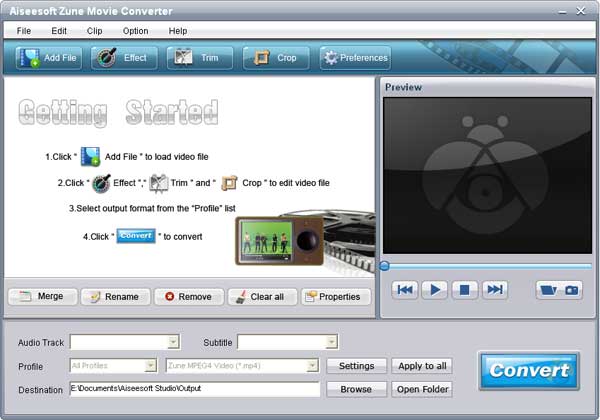
Step2. Install and run Aiseesoft Zune Movie Converter, click the “Add File” button to import your video. Aiseesoft Zune Movie Converter support batch conversion, so you can import multiple files at a time. If you experience any problems adding videos by directly clicking the “Add” button, you can click “File -> Add files…” to add the video files you want to convert from your computer

Zune Movie Converter - Add File

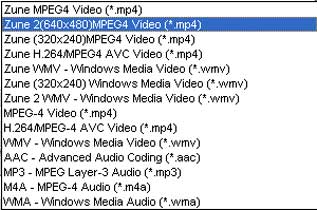
Step3. Then Click the “Format” drop-down list to select the format you prefer for each added file. If you don’t know what formats your device support, you can just select the format according to the device name.

Zune Movie Converter - profile

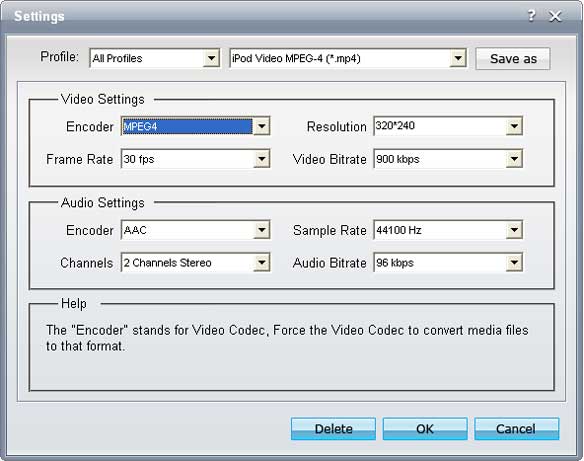
If you want to customize the output quality, click the “Settings” button to open the Settings panel, where you customize resolution, frame rate, video bit rate, audio bit rate, sample, etc.

Zune  Movie Converter - settings

After all things done, click “Start” to start conversion.

Put video on Zune
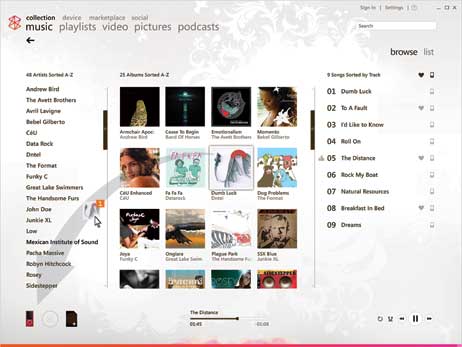
After finish conversion, plug in your Zune to computer via USB cable, then zune software will detect your Zune as a device. drag your converted video to Zune software and click 'Start to sync', then your video will be transfered to Zune. You can download the Zune software free from here to put movie on Zune.
http://www.zune.net/en-us/meetzune/software.htm

Zune full Guide

Next part: How to crop, edit, join and trim movie movie for Zune?

2010年5月10日星期一

Uncle Sam Slow on IT Reform

The Obama administration's push to overhaul how the federal government spends its $80 billion a year annual technology budget is off to a bumpy start.

Changes already are being made to an eight-month old government website that's supposed to make it easier for federal agencies to save money by purchasing cheaper "cloud computing" services, which allow customers to run software or store information at remote data centers. The site was attracting mostly window shoppers.

"This is not an overnight process," said Vivek Kundra, the federal government's first Chief Information Officer. Mr. Kundra joined the White House from the District of Columbia's local government, where he oversaw an upgrade of the city's computer systems.

Mr. Kundra unveiled Apps.gov in September, touting it as "an innovation that not only can change how IT operates, but also save taxpayer dollars."

The site is an online technology supermarket for federal agencies. It allows agencies to bypass the normal bidding process and quickly buy government-approved software and online services with credit cards. But concerns about compliance with security requirements and terms of service have prompted many agencies to bypass Apps.gov.

About 170 transactions have been made on Apps.gov since it launched, said David McClure, an associate administrator of the Government Service Administration. That figure includes downloads of license agreements as well as software purchases.

Plans to offer more expensive cloud-based data storage services were recently delayed after federal officials concluded they needed to start over. "I'd rather do this right than do it fast," said Mr. McClure.

At the Federal Communications Commission, managing director Steven VanRoekel, a former Microsoft Corp. executive, adopted many of the applications available at Apps.gov, including Facebook, Twitter and online voting system Ideascale, for an overhaul of the agency's Web site.

But the agency negotiated its own terms with vendors instead of adopting the Apps.gov agreements. "Our legal team reworked a lot of them," said Mr. VanRoekel, including a no-ads policy for the FCC's YouTube channel to prevent companies that lobby the agency from placing ads around its content.

At the Department of Interior, agency officials are considering moving their email systems to a cloud-based approach. Interior Department employees currently use 14 different email programs, said Andrew Jackson, the Interior Department's deputy assistant secretary for technology and business services.

"It makes absolutely no sense to do it 14 different ways," said Mr. Jackson. About 87% of the agency's $1 billion IT budget is spent just keeping its aging computer systems running, he said. "We're keen to move to a system that's more secure, more reliable and much lower cost."

Apps.gov is an attempt to streamline government technology spending. Federal agencies divvy up $80 billion or so a year in technology spending but many agencies don't use all of the data storage and other computing power they've bought.

"When I first came to the White House I felt like I stepped back a decade when it came to information technology," said Mr. Kundra. "A big part of that is that we don't have the Darwinian pressure of the consumer market to innovate."

In February, the White House directed agencies to begin exploring cheaper cloud-computing options and drawing up plans for consolidating and sharing the government's 1,100 or so data centers.

"A lot of computing power is wasted because each agency will maintain its own server bank. They don't always use all of the power they have," said Ian Millhiser, a policy analyst at the Center for American Progress, a left-leaning think tank.

The administration's focus in cloud computing has prompted interest by technology vendors. Over the past year or so, Google Inc., Salesforce.com Inc. and other tech companies have shifted their sales pitches to highlight their cloud-computing offerings.

"There's a recognition in the federal government that we can save money here and it's the right move," said Curt Kolcun, vice president of Microsoft's public sector division. "We're convinced they're moving to the cloud and we can address their security and privacy concerns."

Consolidating government computing power won't be easy as privacy and security concerns abound. Some agencies, such as the Defense Department and Department of Homeland Security, have more stringent security requirements. And some agencies may be more willing to store data at commercially owned data centers, like ones run by Google and Amazon.com Inc., than others.

2010年5月9日星期日

As Silicon Valley Infighting Gets Ever Nastier, Let’s Be Careful Out There

Last week, BoomTown was in Washington, D.C., my old stomping grounds for 15 years, from attending Georgetown University as an undergraduate to covering the beginnings of the Internet at the Washington Post.

I miss a lot of things about living there, but most definitely not the poisonous political partisanship that you get sucked into from the minute you arrive.

Most recently, for example, it was ugly battles over financial reform, some tough remarks by President Barack Obama toward the GOP and–I swear–the “controversy” over some airbrushing of House Majority Leader Nancy Pelosi on a magazine cover.

In other words, it does not take much for the denizens there to descend into the mud-slinging swamp the city was built on.

But it’s almost a relief to be in D.C. rather than in California, given how increasingly hostile the atmosphere is getting as a range of companies wrestle over a range of issues both key and trivial.

The hostilities especially center on the three main powers of Silicon Valley today: Google (GOOG), Apple (AAPL) and Facebook.

And, specifically, the conflicts include Apple versus Google and Adobe (ADBE) and HTC and the First Amendment; Google versus Apple and Facebook and Microsoft (MSFT) and the Federal Trade Commission and–oh, yes–China; and Facebook versus Google and Twitter and anyone who gets in the way of its Manifest Destiny of Like-buttoning the Web.

Even Yahoo (YHOO) is entering the fray, with CEO Carol Bartz taking please-don’t-forget-us shots at Google and Facebook recently.

The Apple shooting match with Adobe over its Flash video technology is perhaps the most riveting, especially because it is the computer giant’s CEO, Steve Jobs, personally and relentlessly conducting the assault.

Jobs called Adobe technology shoddy, Adobe execs called Jobs controlling, the blogosphere erupted.

While issues around the use of Flash are a lot more complex, of course, they illustrate just how much the digital sector is at a critical inflection point.

That’s especially true as the game moves from the laptop/desktop, Web-centric world to one more social, mobile and focused on innovative new devices, such as smartphones and tablets.

This means the potential for a shift in power, obviously–which, in turn, means more wrangling among and between the digital powers-that-be.

It’s the top of mind as the next D: All Things Digital conference approaches in less than a month. In our eighth foray out, there have never been more overt power struggles among the various players who will be onstage.

Last year, in our opening essay for D7, titled “Welcome to Web 3.0,” we made a prediction.

“So what’s the seminal development that’s ushering in the era of Web 3.0? It’s the real arrival, after years of false predictions, of the thin client, running clean, simple software, against cloud-based data and services,” we wrote, specifically referencing the growing popularity of Apple’s iPod and iPhone as the harbingers of this important trend.

We continued: “But this is not just about one company, one platform or even one form factor. No, this new phenomenon is about handheld computers from many companies, with software platforms and distribution mechanisms tightly tied to cloud-based services, whether they are multi-player games, e-commerce offerings or corporate databases.”

Looking back over the last year, we think we got it pretty right, as companies of all kinds and in all arenas raced to be part of the social, mobile, cloud-centered action.

This fusion and, really, collision of key trends will be at the heart of what we’ll be focusing on at D8 as the major companies in tech and media try to figure out how consumers want to conduct their digital lives going forward and with what devices.

And inevitably, that has begun to cause some major rifts among and between the powers that be throughout tech and media. It’s clear to us that a major realignment of consumer expectations and desires is taking place, along with a fundamental shift in how we all relate to computing.

Still, with all the changes, it’s important to keep a respectful tone, which seems to have gotten a bit lost of late, especially now when every tiny shift and disagreement enters the digital echo chamber and quickly moves from loud to strident.

Such noise inevitably makes the whole competitive necessity of Silicon Valley–which is one of its greatest assets, of course–seem tinny and small, much like what you hear out of Washington all the time.

One of the reasons I moved out West was that it always seemed that–whatever the rivalry or wrangling–Silicon Valley was much better than that.
2010年5月7日星期五

Toyota Cracks the Viral Video Code: Here’s Your Swagger Wagon

Every marketer says they want a viral video. And few of them have any idea how to do it. Toyota has figured this one out, though, with a clip released this week, promoting its Sienna Minivan. Remember when the idea of selling minivans on YouTube sounded nuts?

2010年5月6日星期四

How to Convert AVI to iPhone on Mac

Teach you how to convert AVI to iPhone on Mac step by step.

Step 1 Free download, install and launch the software.

Step 2 Add file, output iPhone format and choose destination

After open this perfect application, you can click "Add File" to import AVI files to the program. Under Profile option, click the down-arrow and choose one format iPhone supports. Find a destination folder to save your output files.

Tip: You can go into Profile settings to customize advanced settings for the output format.

Step 3 Start

Click Start to convert AVI to iPhone MP4 Mac.

At this time, the converted videos can be played on your iPhone perfectly. Just try now quickly!

Go to Mac AVI to iPhone MP4 for other converting & editing features!

2010年5月4日星期二

How to Edit Video With Editor

Aiseesoft video converting software, the best video editor, provide you with powerful and useful editing functions, such as trimming, cropping, merging, watermarking video, etc. Now I will show you how to apply these functions one by one.

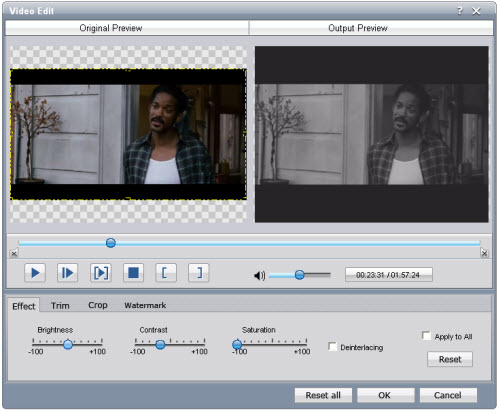
1. Adjust the video effect

If you are not satisfied with the original movie picture, Aiseesoft video converting software can help you adjust the video effect.

Click the “Effect” buttonto open the Video Edit interface.

You can adjust the video brightness, contrast and saturation by dragging the slider bar. Even you can convert an interlaced video to a progress one by checking the “Deinterlacing” box.

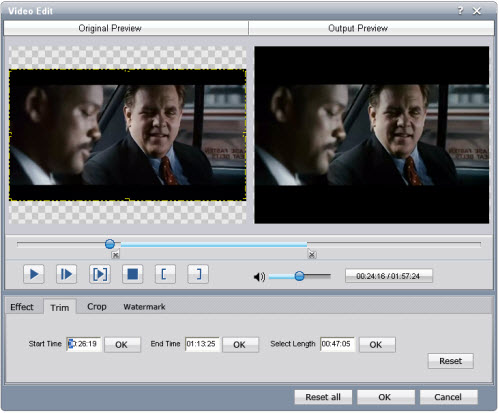
2. Trim video files.

Click the "Trim" button to open the trim window.

And we provide you with three ways to trim your video to your preference.
(1) Drag the slider bar.
(2) Set the “Start Time” and “End Time” values.
(3) Click "Start Time" and "End Time" botton.

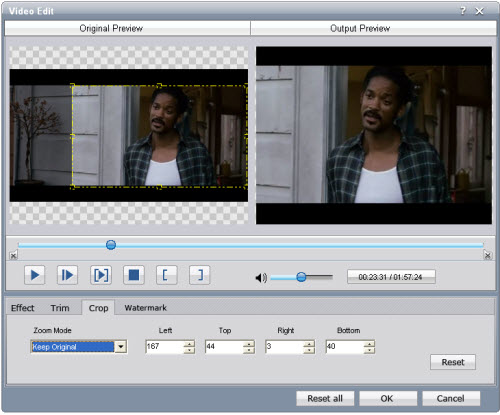
3. Crop video files

Click the “Crop” button and go to the “Video Edit” interface.

Also three ways provided for you to crop your video.
(1) Crop by selecting a crop mode.
(2) Crop by adjusting the crop frame.
(3) Crop by setting the crop values.
You can also set the output aspect ratio from the Zoom Mode according to your need. There are four choices available: Keep Original, Full Screen, 16:9 and 4:3.

With this function, you can easily remove the useless black edges around your movie video and customize the aspect ratio to fit your player.

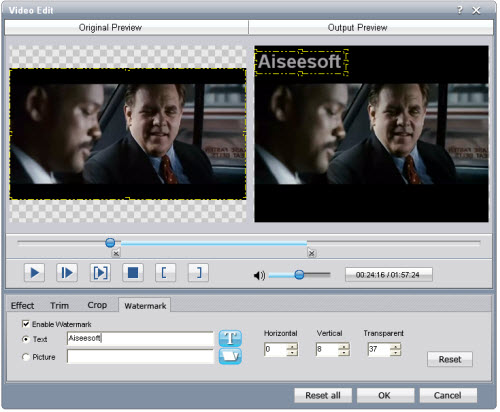
4. Add watermark to the video

Our product also provides you with a fantastic function- watermark. With this function, you can add a special watermark to your video and get the personalized output video.
On the Video Edit interface, you can see there are two watermark forms- text and picture. And you can choose either the “Text” radio button or the “Picture” one. Then you can input whatever you want in the text input frame or select your preferred picture.

And you are allowed to adjust the watermark’s position by setting the horizontal and vertical values or just dragging the watermark on the frame. Also you can adjust the transparent value to get the satisfactory effect.

5. Capture picture from the video.

With Aiseesoft video editor, you are able to capture your favorite picture when you preview you video.

Click the Snapshot button to capture the picture. And you can save the picture in the JPEG, GIF, and BMP format. The Snapshot Folder button can open the file where the capture picture is saved.

2010年5月1日星期六

How to Convert 3GP to iPod

Follow the next guide to learn step by step how to convert 3GP to iPod with the powerful 3GP to iPod video converter software.

1. Free download the powerful 3GP to iPod Converter, install and launch.

2. Add the 3GP video files from the "File" menu.

Convert 3GP to iPod

3. Choose the proper destination folder and output format.

4. Click Start button to convert 3GP to iPod. After a few minutes, you can play the converted 3GP files on iPod.